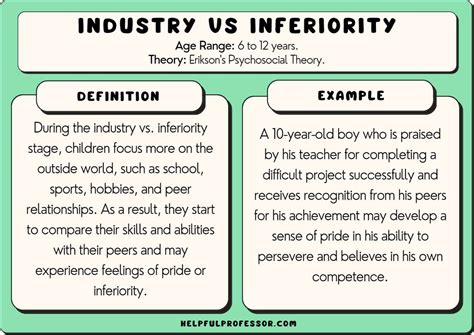
The concept of “Industry Versus Inferiority,” introduced by developmental psychologist Erik Erikson, plays a pivotal role in understanding a child’s psychosocial development during the elementary school years, roughly from ages six to twelve. This critical period involves balancing the challenge of establishing a sense of competence with the risk of falling into inferiority. Parents, educators, and caregivers are integral in fostering a supportive environment that nurtures the child’s ability to take pride in their accomplishments and skills.
Key insights box:
Key Insights
- Building competence during elementary school years is vital for long-term self-esteem.
- Positive reinforcement from adults can mitigate feelings of inferiority.
- Encouraging participation in activities enhances both skill development and self-confidence.
Understanding this stage involves delving into the mechanisms through which children develop a sense of industry. This refers to the child’s ability to feel productive and capable. As children engage in tasks, they compare their achievements with societal standards and peers. If they perceive themselves as competent and successful, they develop a sense of industry. On the other hand, if they feel incapable or less competent, they may develop a sense of inferiority.
A well-designed curriculum that provides achievable challenges, clear expectations, and opportunities for mastery is crucial. Teachers can employ scaffolding techniques, which provide just-in-time support to help students navigate tasks and foster a sense of industry. For example, assigning projects with achievable goals and offering positive feedback can significantly bolster a child’s confidence and competence.
Social environments play a critical role in shaping a child’s industry. Parents and caregivers should offer constructive feedback and celebrate small victories to reinforce the child’s capabilities. For instance, when children complete a homework assignment or learn a new skill, acknowledging their effort and achievements can foster a sense of pride and competence.
The interplay of intrinsic and extrinsic motivation is essential in this stage. Intrinsic motivation, which stems from an internal desire to accomplish a task for its own sake, should be encouraged by creating a supportive and stimulating environment. Extrinsic motivation, often provided through rewards and recognition, should be balanced carefully to prevent over-reliance on external validation.
FAQ section:
What role does peer comparison play in a child’s sense of industry?
Peer comparisons are crucial during this developmental stage. Children often gauge their competence by comparing themselves to their peers. A supportive peer environment that fosters collaboration and mutual respect can help children feel a sense of industry, whereas a competitive environment may increase feelings of inferiority.
How can educators support children’s sense of industry?
Educators can support children’s sense of industry by creating a classroom environment that balances challenges with achievable goals. Incorporating collaborative projects, offering positive feedback, and celebrating successes can help reinforce a child’s confidence and competence.
In summary, Erikson’s stage of Industry Versus Inferiority is a fundamental component of psychosocial development. By focusing on building competence, offering constructive feedback, and fostering supportive environments, parents, educators, and caregivers can significantly enhance a child’s ability to develop a strong sense of industry, thereby paving the way for future success and self-esteem.