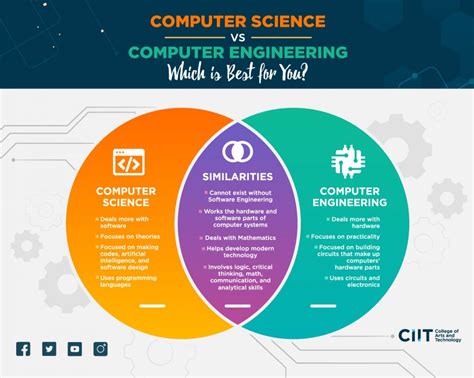
The distinctions between Computer Science (CS) and Computer Engineering (CE) are frequently blurred in the public consciousness, leading many to assume they are essentially the same. However, this is far from the truth. While both fields intersect in their application to technology and computing, they diverge significantly in focus, methodology, and career paths. This article aims to untangle these threads, offering clear, evidence-based insights to help prospective students make an informed choice.
Key Insights
- CS emphasizes theoretical principles and problem-solving in computer systems.
- CE focuses on the technical and practical aspects of designing and building computer hardware and systems.
- Both fields offer robust career opportunities, but they cater to different skill sets and professional interests.
Theoretical vs. Practical Focus
Computer Science primarily revolves around the theoretical foundations and algorithms behind computing systems. It is deeply rooted in mathematics and logic, offering students the ability to develop software, solve complex problems, and understand how computers operate at a foundational level. For instance, courses in CS often cover topics such as data structures, algorithms, artificial intelligence, and theory of computation.On the other hand, Computer Engineering merges both hardware and software domains, focusing more on the practical side of computing. CE delves into the design and optimization of computer hardware, networking components, and embedded systems. Students in CE are often required to work with circuit design, digital systems, and real-time systems, applying principles from both electrical engineering and computer science to create functional and efficient technologies.
Career Opportunities and Pathways
The career paths for CS and CE graduates are distinct yet complementary. A Computer Science degree typically opens doors to roles such as software developer, data scientist, system analyst, and research scientist. With a focus on algorithms and programming, CS graduates are often tasked with developing innovative software solutions, conducting research in new computational methods, and improving existing software systems.Conversely, a degree in Computer Engineering often leads to positions in hardware design, embedded systems, network engineering, and systems architecture. CE graduates are instrumental in designing and improving the physical components of computing technology, ensuring that software runs effectively on well-engineered hardware. They are often found in roles such as hardware engineer, system architect, and network engineer, where their practical and technical skills are crucial.
Which field has better job prospects?
Both fields offer excellent job prospects with demand for skilled professionals growing in tech industries. The preference often depends on the specific industry and personal interest. CS degrees tend to be favored for software and tech companies, while CE degrees are often sought after in hardware-centric sectors.
Can I switch between CS and CE after starting my degree?
While it is technically possible to switch between CS and CE, it requires additional coursework and time to catch up in the specific field. It’s usually easier to focus on one field due to the specialized nature of each curriculum.
In conclusion, while Computer Science and Computer Engineering share common ground in the realm of technology, their core focuses and applications diverge significantly. Understanding these differences can guide students toward a path that aligns with their strengths and career aspirations. By weighing these key insights, students can make a well-informed decision tailored to their professional goals and interests.